
America is on the verge of the largest expansion of electrical infrastructure since the creation of the modern utility grid. Electric vehicles, heat pumps, hyperscale AI data centers, and eventually millions of personal robotic devices are/will rapidly increase the nation’s demand for electricity. Some experts believe the United States could soon require two to four times the power the grid can deliver today. Meeting that demand will not come from a single new power plant or technology. It will require rethinking where electricity is generated and how it moves through our communities. One of the most promising and overlooked solutions may already exist in plain sight: the parking lots that surround nearly every building in America.
In rural communities like Marshall, Michigan, home to Solar Mounts, LLC., land use debates are particularly visible. Calhoun County is heavily agricultural, with vast corn and soybean fields defining the landscape. Recently, solar developers have been leasing or purchasing farmland to install large solar farms consisting of single-axis trackers carrying high-efficiency photovoltaic (PV) panels, typically producing 450 to 700 watts each. These projects are helping expand America’s renewable energy capacity, but they have also raised concerns among some residents who worry that solar farms are taking productive farmland out of circulation. The reality, however, is more nuanced.
Solar Development Does Not Have to Compete with Agriculture
As background, a large portion of corn grown across the Midwest is not destined for food production. Instead, it is processed into ethanol for fuel. In many regions, solar installations are not replacing food production at all; they are replacing one form of energy production with another. Equally important, solar farms do not permanently transform farmland the way housing developments or commercial buildings do. Solar systems require relatively minimal soil disturbance, chemicals do not leach off the solar panels and into the ground, and when a project reaches the end of its life, the equipment can be removed and the land restored to agriculture.
In some cases, agricultural activity continues during the life of the solar project. Research into agrivoltaics, the combination of solar energy generation and agriculture, has shown that vegetation, pollinator habitats, and even grazing livestock can thrive beneath solar arrays. Partial shading can reduce water evaporation and protect certain plants from heat stress. Sheep grazing under solar panels has become a practical vegetation management strategy in several regions of the United States.
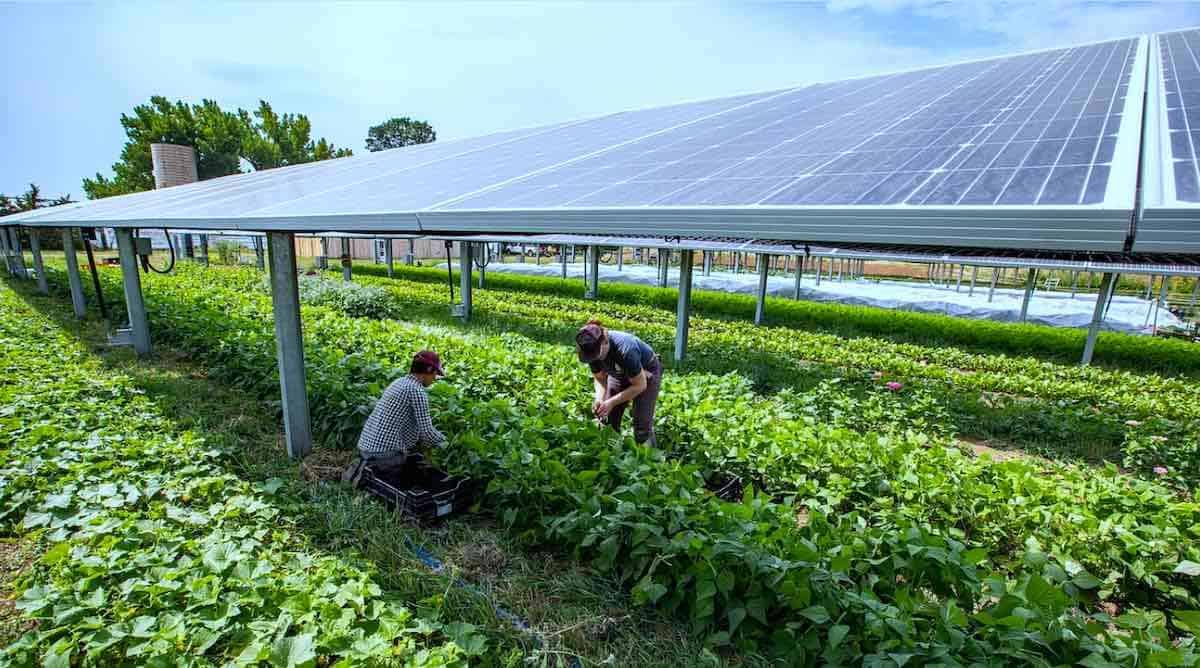
Figure 1. Agrivoltaics Site where leafy greens are prospering under the Solar Panels
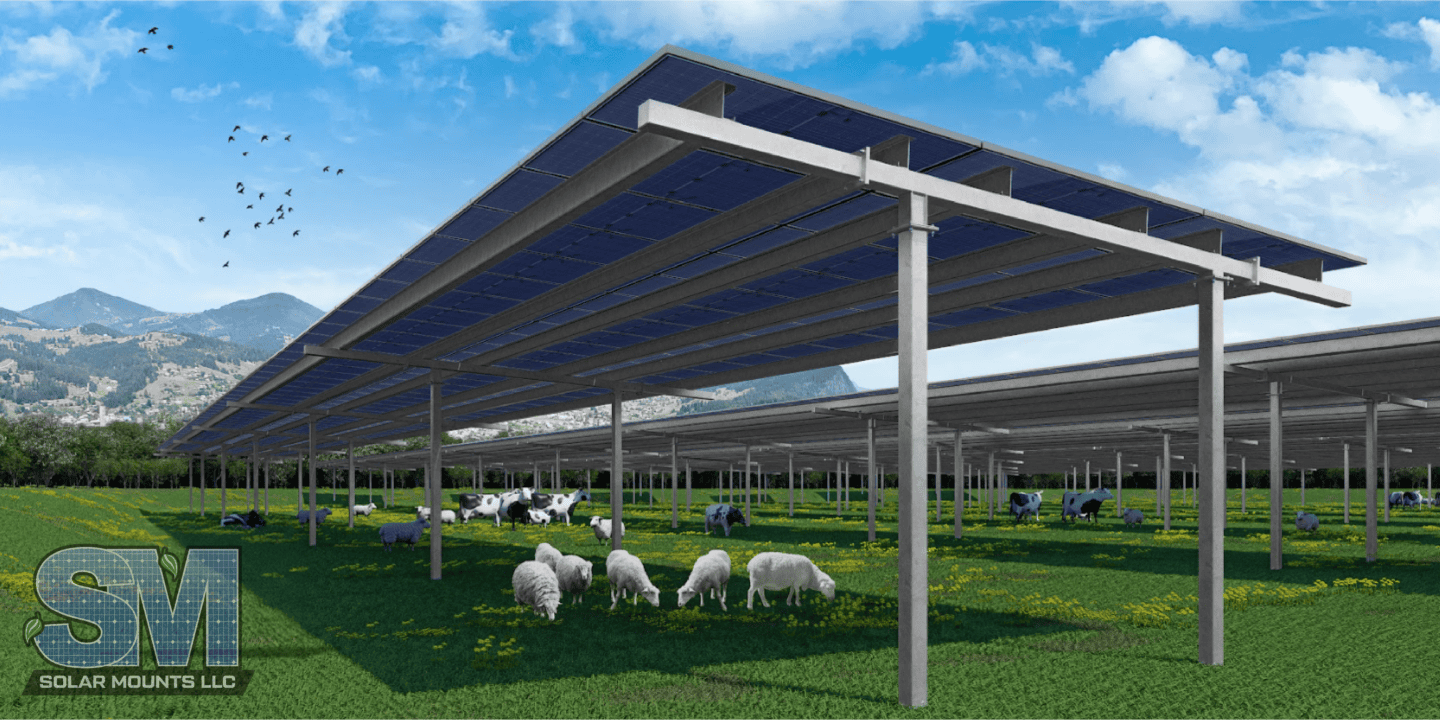
Figure 2. Solar Mounts, LLC. Eclipse Series Agrivoltaics Structures
Another often-overlooked aspect of the farmland debate is scale. The United States has millions of acres of agricultural land, nearly 900 million acres (1.4 million mi2) of total farmland, ~300 million acres of highly productive (prime) farmland, with roughly 200 million acres in high yield cropland use. At the same time, more than 40,000 square miles of land are already leased to the oil and gas industry, and vast expanses of open land across the Southwest are ideally suited for solar energy development.
Even a major expansion of solar, e.g., 10,000 square miles, 6.4 million acres, would occupy only a small fraction of this land. Solar power development doesn’t need to compete with agriculture at all. Modern approaches such as agrivoltaics allow crops, grazing livestock, and solar generation to coexist on the same land, turning farmland into a dual-use asset that produces both food and energy. But that still leaves an important question: Where should solar infrastructure go first?
America’s Parking Lots Are an Untapped Energy Resource
If the goal is to expand renewable energy without competing with agriculture, the most obvious answer may already be built – parking lots. The United States is estimated to have more than two billion parking spaces, covering roughly 3,600 square miles of paved surface. These areas absorb sunlight all day long but currently produce no energy. Solar Carports change that equation. A solar carport is a structural canopy installed above parking spaces that uses photovoltaic panels as the roof. Instead of leaving the parking lot exposed to sun, rain, and snow, the structure provides shade and weather protection while generating electricity for nearby buildings and/or the local utility grid.
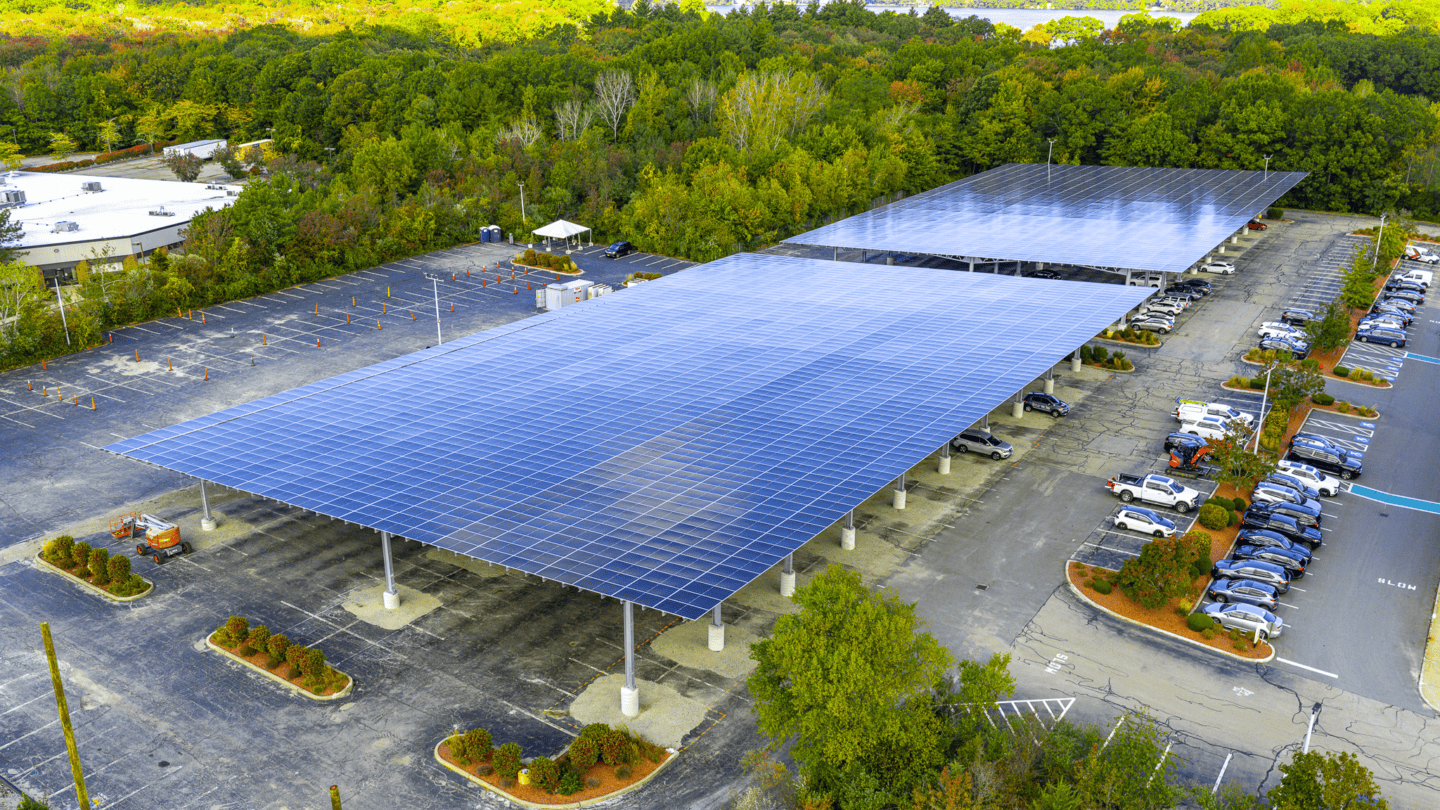
Figure 3. Solar Mounts, LLC. Galactic Series Solar Carports
Even covering a modest percentage of these parking areas with solar panels would create an enormous amount of distributed energy generation. Office parks, universities, hospitals, retail centers, and industrial campuses all have parking infrastructure that could host solar installations without requiring new land. Just as important, solar carports generate electricity where the energy is actually consumed, close to buildings, businesses, and communities.
Solar Carports Deliver Multiple Benefits
Solar carports are marginally more expensive to construct than ground-mounted solar arrays because they require structural steel and elevated foundations. However, they also provide multiple benefits that extend beyond energy generation. For property owners, a solar carport turns an existing asset, the parking lot, into an energy-producing facility. The electricity produced can offset building energy consumption and reduce long-term operating costs. For employees and visitors, the structures provide a far more comfortable parking experience. Vehicles parked beneath solar canopies are protected from rain, snow, and intense summer sun. Interiors remain cooler, reducing air-conditioning demand when drivers return to their cars, and helping preserve vehicle interiors over time.
Electric vehicles benefit even more. Lower temperatures reduce battery cooling demands and help preserve driving range. As EV adoption accelerates, solar carports can integrate charging stations that allow vehicles to recharge using locally generated renewable electricity. Advances in engineering have significantly expanded the capabilities of solar carports. Today’s systems can be designed to withstand wind speeds exceeding 150 miles per hour, meet rigorous seismic standards, and support advanced lighting systems, including wildlife-friendly lighting strategies. Many designs also incorporate fully waterproof canopy structures, transforming solar carports into functional infrastructure that protects equipment, vehicles and pedestrians while generating clean electricity. In many ways, solar carports are evolving from simple shade structures into distributed energy platforms. And that transformation may become increasingly important as electricity demand begins to surge.
The Coming Surge in Electricity Demand
Energy experts increasingly believe the United States may be approaching a major inflection point in electricity demand. Some projections suggest that within the coming decades the country may require two to four times as much electricity as the grid can supply today. Several new technologies are driving this shift. Electric vehicles are replacing gasoline-powered transportation. Heat pumps are rapidly becoming the preferred solution for building heating and cooling. Artificial intelligence has triggered a wave of hyperscale data center construction, each requiring enormous amounts of electricity.
A single AI server rack can consume 250 kilowatts of power, roughly the same electrical demand as dozens of homes. Multiply that across thousands of racks inside massive data centers, and the power requirements become staggering. Looking further ahead, some analysts believe millions of personal robotic devices could eventually become common in homes and workplaces, adding yet another layer of electrical demand. All this electricity must come from somewhere. Meeting that demand may require what some experts describe as a complete transformation of the utility grid.
From the Internet to the “Enternet”
The traditional electrical grid was designed for centralized power plants sending electricity in one direction to consumers. But the energy system now emerging looks very different. Experts increasingly believe the future grid may resemble the architecture of the internet – a system that grows organically as new nodes are added. Some researchers have begun referring to this concept as the “Enternet”: a grid-of-grids network that efficiently moves energy the way the internet moves information. In this model, electricity is generated and stored in many different locations—solar arrays, battery systems, microgrids, and local energy hubs—rather than exclusively at large, centralized plants.
Interestingly, much of the modern digital world already operates on direct current. Nearly 80 percent of the alternating current electricity delivered by utilities is eventually converted to DC power inside electronic devices. AI servers, data centers, batteries, and solar panels all operate naturally on direct current. This shift toward DC-compatible infrastructure could reshape how energy is generated, distributed, and consumed. One country is already experimenting with this approach on a national scale.
South Korea Is Building the Future Grid
South Korea has limited land available for traditional large-scale solar farms, which has forced the country to think creatively about how to deploy renewable energy. Parking lots have become a key part of the solution. The South Korean government is encouraging the installation of solar carports over large parking facilities, particularly those serving public buildings, commercial centers, and industrial campuses. These installations transform existing infrastructure into distributed energy generation sites. But South Korea’s vision goes beyond solar panels alone.
The country is simultaneously modernizing its electrical infrastructure to support power surety, a system designed not just to restore power after an outage (i.e., power resiliency) but to ensure the power never disappears in the first place. Articulation of power, i.e., packetized power, plus fault managed power is foundational for future energy systems. Korea Electric Power Corporation (KEPCO) is developing portions of its grid around high-voltage direct current transmission combined with advanced microgrid infrastructure. Local microgrid substations receive high-voltage DC power from the national grid and distribute it within communities through DC-coupled hubs.
Electricity may be distributed locally at levels such as 1500Vdc or 700Vdc, before stepping down to approximately 350Vdc for residential systems. These microgrids integrate solar arrays, large battery systems, and other distributed energy resources.
Homes may eventually include both traditional AC outlets and direct-current outlets supplied through home inverters. The result is a highly flexible system capable of integrating renewable energy, energy storage, small LPG peaker turbines and distributed generation across entire neighborhoods. In this model, solar carports become more than parking structures—they become nodes within a resilient energy network.
Solar Mounts, LLC. Preparing for the Next Phase of Solar Infrastructure Development
The transformation of the electric grid will not happen overnight. But the early stages are already visible. Parking lots, rooftops, brownfields, and landfills are being recognized as valuable locations for distributed solar generation. Microgrids and battery systems are becoming more common as communities seek greater energy resilience. At Solar Mounts, LLC., this transition is already shaping the company’s work. Based in Marshall, Michigan, the company installs solar carports across the United States while also developing ground-mounted systems on underutilized sites such as fallow farmland, landfills and brownfields.
As electricity demand grows and energy infrastructure evolves, solar carports are likely to play a larger role in the built environment. The parking lots surrounding our offices, hospitals, schools, and shopping centers may soon become part of a broader network of distributed energy generation. Just as the internet transformed how information moves across the world, the next generation of energy infrastructure may transform how electricity flows through our communities. And in that future, the parking lot outside your building may be one of the most valuable places to generate power.